Meeting Emerging Technologies with Workforce Readiness: Two Studies in UK Offshore Wind
Two Innovate UK-published studies reveal the future skills offshore wind will need to deliver dispatchable clean energy and accelerate autonomous subsea survey — and what it means for industry now.
FUTURE SKILLSAUTONOMYHYBRID ENERGY
Paul Hatchett
7/7/20264 min read
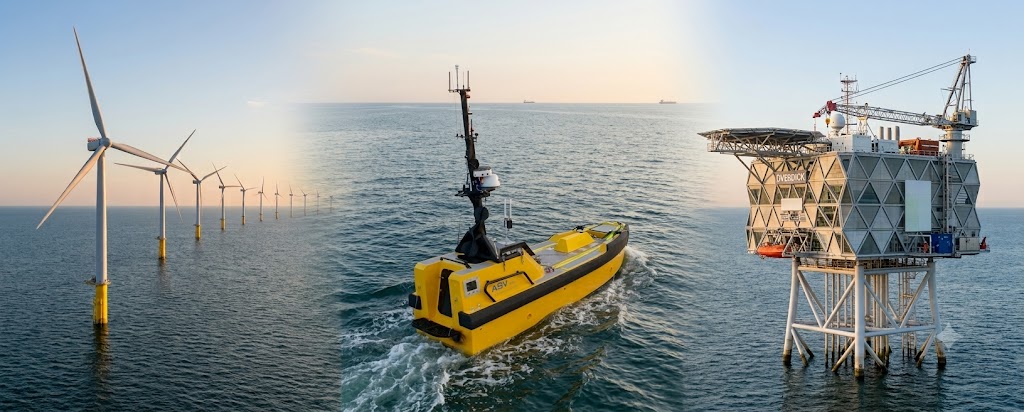
I'm pleased to share that two Workforce Foresighting studies we convened and consulted on have now been published through Innovate UK and the Workforce Foresighting Hub, in partnership with Offshore Renewable Energy (ORE) Catapult. These studies continue from a series of five studies in previous years, addressing critical topics for the industry (following workshops we facilitated with ORE Catapult, grounded in the UK's Offshore Wind Industrial Growth Plan).
Both studies sit within a growing body of work asking a deceptively simple question: as offshore wind adopts new technologies, what capabilities will our workforce need — and when?
Why this matters
Workforce foresighting is a systemic approach that helps industry, educators and policymakers anticipate how emerging technologies will shape workforce demand in the future. By identifying future capability requirements early, it enables education and training systems to adapt in time – enabling skills development to move from a lagging to a leading footing. Rather than reacting to shortages once they bite, we can align skills investment with where the sector is actually heading.
Study 1: Hybrid Energy Systems and Dispatchable Clean Energy
The first study looked at a challenge that's easy to overlook amid all the excitement about gigawatts of new capacity: meeting future energy demand is not just about generating more electricity from green, renewable sources – it is about ensuring that energy can be delivered when and where it is needed.
The scale of the ambition is significant. The UK's Clean Power Action Plan 2030 set a target of 43–50GW of offshore wind capacity by 2030, almost tripling current installed capacity. But wind energy is inherently weather‑dependent, which can create a mismatch between energy supply and demand... leading to costly curtailment charges when generation exceeds grid capacity – these charges reached £1.46 billion in 2025.
The study explored three technologies expected to help close that gap — Battery Energy Storage Systems (BESS) for rapid response, Electrolysis (hydrogen) and Power‑to‑X technologies for long‑duration storage, and Grid‑forming technologies to provide synthetic inertia and maintain grid stability — and asked what new capabilities the workforce will need to deliver them.
The headline numbers: the study identified 113 workforce capabilities relevant to hybrid offshore wind systems, of which 107 were newly defined by the study, grouped into profiles in the following areas:
Grid-Forming Power Electronics & Advanced Control Systems
Hybrid Grid Integration, Stability & Compliance
Power-to-X, Hydrogen & Multi-Vector Energy Systems.
Digital Systems Modelling.
Manufacturing, Installation & Supply Chain Integration.
Markets, Regulation & System Governance.
Collaboration, Innovation & Advocacy
Study 2: Accelerating Subsea Survey Using Autonomous Systems and AI
The second study, also sponsored by RenewableUK, tackled a very different but equally consequential bottleneck: Pre-consent subsea survey.
It's easy to underestimate how much of a wind farm's development timeline is spent simply understanding the seabed. Yet subsea survey, including water depth, seabed topography, and hazards like unexploded ordnance - is currently a major constraint. Improving subsea survey is identified as an "expand" priority in RenewableUK's Offshore Wind Industrial Growth Plan, with an estimated £10M–£20M of investment forecast between 2026 and 2030, targeting a reduction in offshore wind consenting time by up to 40%.
As with introducing hybrid energy systems, the scale of the workforce implications are considerable: This cycle identified 122 future capabilities, grouped into 14 profiles covering autonomous systems design, AI-driven data analysis, digital twin development, and regulatory governance for uncrewed operations. The five priority areas identified by the group were:
RAS technology, design and system architecture
Mission simulation and digital twinning
Governance, assurance & consenting
Hydrographic survey and data interpretation
Data science & AI development.
What both studies have in common
Side by side, these two reports tell a consistent story: The technologies changing offshore wind - whether it's grid-forming inverters or autonomous underwater vehicles - don't just require new kit. They require people with new capabilities that don't yet map neatly onto today's apprenticeship standards or existing courses (though more on that point to come in a future post). Both studies found significant proportions of required future capabilities weren't well matched to any existing training standard - which is exactly the gap workforce foresighting exists to surface.
Thank you
No study like these can happen without input from a number of talented people. Particular thanks go to Matt Short and Evelyn Hadley, who facilitated the workshops with real skill and patience — foresighting cycles depend on getting the best out of the conversations, and they did exactly that.
Thanks also to the wider group of participating organisations who gave their time and expertise, including ORE Catapult, Reach Subsea, Soil Machine Dynamics, EIVA, The Crown Estate, Newcastle University, Plymouth University, the National Oceanography Centre, the Alan Turing Institute, WD Hydrotech, the Net Zero Industrial Innovation Centre, Centrica, Verlume, HiiROC, the Energy Systems Catapult - and everyone else who contributed insight across both cycles. This kind of research is only as good as the willingness of industry and academic experts to give up their time to think seriously about the future.
Read the full reports
Preparing the Workforce to Deliver Dispatchable Clean Energy
Accelerating Subsea Survey in Offshore Wind using Autonomous Systems and AI
Workforce Foresighting for Organisations
If you're part of an organisation grappling with how new technology adoption will reshape your own workforce needs - whether that's a new process line, a new plant, or simply a new piece of kit that changes how your people work - this is exactly the kind of question I help organisations answer, often starting with a lighter-touch, focused version of this process.
Paul Hatchett Consulting Limited
Unit A1 Marquis Court, Team Valley Trading Estate, Gateshead, NE11 0RU, United Kingdom
Company No. 13420439 | VAT Reg. No. 381 4021 25
© Paul Hatchett Consulting Limited | Privacy Policy